.jpg)
Geoengineering is not the solution to saving the polar regions, say scientists
Large-scale technological fixes, known as geoengineering, will not protect the Arctic or Antarctica from climate change—and could even cause harm.
That is the conclusion of a new international study published in Frontiers in Science, which assessed five of the most discussed concepts for geoengineering in the polar regions.
The Arctic is heating much faster than the rest of the planet and Antarctica is showing accelerating ice loss. Melting of sea ice, glaciers, and ice shelves is disrupting fragile ecosystems and communities, and contributing to global sea level rise. Scientists stress that the best way to prevent further damage is to cut greenhouse gas emissions, in line with the Paris Agreement goal of staying below 1.5 C and Europe’s target to reach net zero by 2050.
Geoengineering is being proposed to delay these impacts, but the new study found that none of the proposed concepts are workable. Spraying particles into the atmosphere to reflect sunlight could damage the ozone layer and disrupt global weather patterns. Underwater “sea curtains” might block ocean currents but will disrupt habitats and migrations routes of whales, seals, and seabirds. Attempts to thicken ice with seawater pumps or whiten it with reflective beads are untested and risky. Pumping meltwater from beneath glaciers could disturb hidden ecosystems, while fertilizing the oceans with iron could upset food chains and fisheries.

The authors warn that these projects would cost tens of billions of dollars, be extremely difficult to build in the harsh polar environment, and risk distracting governments from cutting emissions. And governance of such projects would be extremely difficult in our increasingly fragmented world order. “Mid-century is approaching, but our time, money, and expertise is split between evidence-backed net zero efforts and speculative geoengineering projects,” said lead author Professor Martin Siegert of the University of Exeter. Dr Heidi Sevestre of the Arctic Monitoring and Assessment Programme Secretariat added that unproven experiments must not replace immediate climate action.
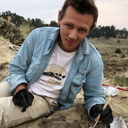
Marie Cavitte, a climate scientist at Vrije Universiteit Brussel (VUB) and co-author of the study, stressed the risks for polar ecosystems: “Working in Antarctica has taught me how delicate and interconnected these systems are. Any large-scale engineering project in such a hostile environment risks unintended consequences for ecosystems, Indigenous communities, and might not succeed in preserving the ice itself. The safest, most effective option remains rapid decarbonization. None of the geoengineering concepts we examined reduces for example ocean acidification, which will continue to occur with increasing carbon emissions, even if we artificially reduce the planet’s thermostat. It is much more efficient, economically as well, to have strong policies to reduce emissions, than to speculate on miraculous technological solutions.”
The study concludes that geoengineering offers false hope, while cutting emissions offers proven results. If the world reaches net zero, scientists expect global heating to stabilize within about 20 years, giving the poles—and the planet—a real chance of recovery.
Reference
Siegert, M., Sevestre, H., Cavitte, M., et al. (2025). Safeguarding the polar regions from dangerous geoengineering: a critical assessment of proposed concepts and future prospects. Frontiers in Science. https://www.frontiersin.org/journals/science/articles/10.3389/fsci.2025.1527393/full
Contact
Dr. Marie Cavitte
E-mail: marie.cavitte@vub.be
Tel: +32 (0)470 19 24 15
Koen Stein