VUB researchers investigate need for infrastructure at basketball and volleyball clubs

While the Belgian Cats women’s basketball team have qualified gloriously for the Olympics in Paris this summer, Flemish clubs are having difficulty training new talent. That is the finding of Prof Inge Derom and doctoral student Kari Descheemaeker, of the Sport & Society research group at the VUB. Commissioned by sports federations Basketbal Vlaanderen and Volley Vlaanderen, they investigated the needs of sports clubs regarding infrastructure and the current and future growth of basketball and volleyball in Flanders.

shutterstock image
shutterstock image

The research consisted of two tasks. First, analysing existing data about membership of Basketbal Vlaanderen and Volley Vlaanderen. Second, designing and carrying out a large-scale survey of sports clubs to assess the use and quality of infrastructure, as well as the strengths and weaknesses of the clubs’ operations. Via an online survey, 131 basketball clubs (58% of all clubs) and 98 volleyball clubs (38%) indicated their needs.

“For both basketball and volleyball, we see an increase in the number of affiliated members between 2014 and 2022,” says Prof Derom. “Based on the current popularity of the sports, we predict a further rise by 2030.” An increase in membership means an increase in the use of infrastructure. This is where clubs face a major problem at the local level: about seven in 10 clubs cannot recruit further members with their current, limited access to infrastructure. “Clubs don’t have sufficient hours available in the existing infrastructure to organise training sessions and/or matches. According to our results, fewer than three in 10 clubs can organise their activities in one location. Additionally, more than five in 10 clubs have problems with the quality of that infrastructure,” adds Descheemaeker.

It is concerning that clubs have so many unmet needs. “Primarily, it is about the need for additional hours and courts to organise training and competitions, but also about the quality of available infrastructure. Investments in new infrastructure such as 3x3 and beach volleyball courts were also brought up. Almost five out of 10 basketball clubs want to offer 3x3, but the lack of playable and available outdoor courts unfortunately prevents this,” says Prof Derom. As well as a shortage of infrastructure, many clubs have implemented a pause on new memberships because of a lack of qualified coaches.

The results of the survey are relevant for various stakeholders in the sports sector, particularly local clubs (as well as for other sports such as gymnastics and indoor football), federations and owners/operators of infrastructure. Investment in infrastructure appears to be essential.


Contact

Inge Derom inge.derom@vub.be

0498 53 28 47
Koen Stein
Koen Stein

Perscontact wetenschap & onderzoek


Share

Latest stories

Website preview
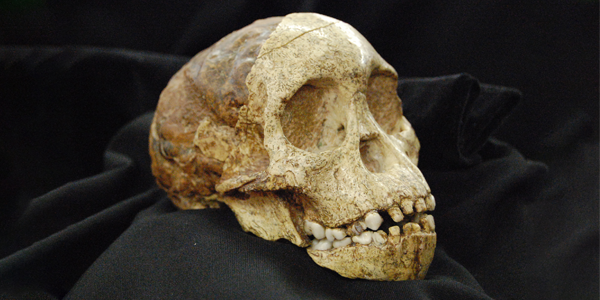
Three-Million-Year-Old Taung Child Once Again Shakes Up Our Human Family Tree
A study led by AMGC-VUB researcher Gabriele Macho sheds new light on one of the most famous fossils in human evolution
press.vub.ac.be
Website preview
VUB student team develops innovative ‘Trojan horse’ in the fight against the Asian hornet
BRUSSELS 9 November 2026 – An interdisciplinary team of students from the Vrije Universiteit Brussel is taking part in iGEM, the prestigious international synthetic biology competition in Paris (13–16 November), this autumn. Using a clever combination of artificial intelligence, a mechanical trap and protein nanofibres, they are presenting a targeted method to efficiently control populations of the Asian hornet.
press.vub.ac.be
Website preview
Beyond the calcification: VUB-imec researchers identify the tissue surrounding individual breast microcalcifications as a key source of diagnostic information in 3D micro-CT images
A study performed on 3504 individual breast microcalcifications (MCs) scanned using high-resolution 3D micro-CT reveals that the surrounding tissue microenvironment provides stronger diagnostic information than the calcified core alone for distinguishing benign from malignant breast lesions.
press.vub.ac.be

Get updates in your mailbox

By clicking "Subscribe" I confirm I have read and agree to the Privacy Policy.

About Press - Vrije Universiteit Brussel

Vrije Universiteit Brussel is an internationally oriented university in Brussels, the heart of Europe. By providing excellent research and education on a human scale, VUB wants to make an active and committed contribution to a better society.

The World Needs You

The Vrije Universiteit Brussel assumes its scientific and social responsibility with love and decisiveness. That’s why VUB launched the platform De Wereld Heeft Je Nodig – The World Needs You, which brings together ideas, actions and projects based on six Ps. The first P stands for People, because that’s what it’s all about: giving people equal opportunities, prosperity, welfare, respect. Peace is about fighting injustice, big and small, in the world. Prosperity combats poverty and inequality. Planet stands for actions on biodiversity, climate, air quality, animal rights... With Partnership, VUB is looking for joint actions to make the world a better place. The sixth and last P is for Poincaré, the French philosopher Henri Poincaré, from whom VUB derives its motto that thinking should submit to nothing except the facts themselves. VUB is an ‘urban engaged university’, strongly anchored in Brussels and Europe and working according to the principles of free research.

www.vub.be/dewereldheeftjenodig


Contact

Pleinlaan 2 1050 Brussel

0473 96 73 51

tineke.sonck@vub.be

www.vub.ac.be