
VUB researcher's quest for some of the oldest ice on Earth
Brussels 24/11/2026 - Some of the oldest clues to Earth’s climate history lie surprisingly close to Antarctica’s surface. Researchers at the Vrije Universiteit Brussel (VUB) are exploring the potential of these ancient archives, with a new scientific perspective coinciding with two Antarctic field expeditions.
In a perspective published today in the Proceedings of the National Academy of Sciences (PNAS), researchers from VUB’s bglacier group in the Department of Water and Climate highlight the exceptional potential of Antarctic blue ice areas. These regions can preserve ice hundreds of thousands or even millions of years old, offering valuable windows into Earth’s distant past.
“The search for ancient ice has traditionally focused on drilling deep into the Antarctic ice sheet,” says lead author Dr. Veronica Tollenaar, an FWO postdoctoral researcher. “Blue ice areas offer a complementary route: in the right locations, exceptionally old ice can be found at or near the surface. The challenge is knowing where to look.”
Exploring these sites could expand access to climate archives that remain largely untapped. “In some locations, blue ice areas allow us to recover ice older than that retrieved through deep drilling, at a relatively low cost,” adds co-lead author Dr. Etienne Legrain, also an FWO postdoctoral researcher. “These samples offer rare snapshots of past climates. They can help us understand how the climate system responds to change and what this means for our future.”

From scientific promise to Antarctic fieldwork
The publication coincides with two Antarctic expeditions involving three other members of the bglacier group. Joachim Piret is currently exploring blue ice areas as part of a Chilean mission at Union Glacier, while Dr. Maaike Izeboud and Zoé Bosman are heading to promising sites near the Belgian Princess Elisabeth Station. Both expeditions aim to identify and investigate potentially ancient ice.
“We combine ice-flow modelling and satellite imagery to identify promising locations, then head into the field to investigate them,” says Prof. Harry Zekollari, who leads the bglacier group. “It is exciting to bring these approaches together in the search for ice that could reveal chapters of Earth’s climate history we know little about. With these expeditions, we are building a long-term research effort and aim to play a leading role in Europe’s exploration of these remarkable archives.”

The work on Antarctic blue ice areas is supported by the Research Foundation – Flanders (FWO) and the Belgian Science Policy Office (BELSPO), with logistical support from the International Polar Foundation (IPF) and the Instituto Antártico Chileno (INACH).
Details publication: Tollenaar, V., Legrain, E. (2026) Unlocking the unparalleled paleoclimate record of Antarctic blue ice areas, PNAS https://doi.org/10.1073/pnas.2603650123
Contact:
Etienne Legrain (etienne.legrain@vub.be),
Harry Zekollari (harry.zekollari@vub.be) tel nr. available upon request
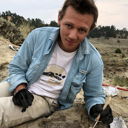
Koen Stein


