.jpg)
VUB researchers identify a rare class of ‘oddball’ meteorite that caused the extinction of the dinosaurs
Earth scientists are getting ever closer to identifying the type of meteorite that caused the Cretaceous–Palaeogene mass extinction. New research shows that it was no ordinary space rock. An asteroid with a composition similar to that of CO chondrite meteorites was likely the culprit that struck the Earth 66 million years ago and wiped out 75 per cent of all animal species, including the non-flying dinosaurs.
The findings, published today in the scientific journal *Science Advances* by researchers from Paris, Brussels, Vancouver and Vienna, utilise advanced nickel isotope analysis of samples to determine the exact composition of the deadly Cretaceous–Palaeogene meteorite.
Professor Steven Goderis of the Archaeology, Environment and Geochemistry (AMGC) research group at the Vrije Universiteit Brussel emphasises the enormous impact of this discovery on our understanding of the solar system. “Tracing the precise chemical fingerprint of an impact that took place so long ago is a huge leap forward,” explains Prof. Goderis. “Using advanced isotope analysis, we can now determine with much greater precision the specific part of our solar system from which the devastating meteorite originated, providing us with fundamental insights into the dynamics of cosmic impacts on our planet.”
Co-author Prof. Philippe Claeys (VUB / University of British Columbia) adds that carbonaceous chondrites of the Ornans class are in no way comparable to the typical meteorites found in museum collections. A CO chondrite contains far fewer volatile elements such as carbon, zinc, water and sulphur. This makes it less likely that sulphur from the meteorite itself was the decisive factor in the extinction, but rather the fine dust and debris that were hurled into the atmosphere.
Challenging isotope measurements
Researchers from the Institut de Physique du Globe and the Université de Paris, in collaboration with the VUB team, carried out extremely precise nickel isotope measurements on samples collected over the years from the thin clay layer deposited worldwide by the impact.
According to the research team, this is an exceptionally challenging task. Only a tiny fraction of the meteorite itself has been preserved in the planetary KT clay layer, as the object vaporised almost entirely upon impact. Possible regions of origin for this world-shaking meteorite include the distant, debris-rich outer regions of our solar system or the outer edge of the asteroid belt near Jupiter.
An extremely rare event
Carbonaceous chondrites account for only five per cent of the meteorites found on Earth to date, and CO chondrites in turn make up a small fraction of these. They are among the most primitive and unaltered materials from our early solar system.
According to the researchers, the fact that Earth was struck by such a rare and distant object underlines once again just how unlucky the dinosaurs were. The Cretaceous–Palaeogene meteorite was roughly 10 to 15 kilometres wide, struck the Earth at an estimated speed of 64,000 kilometres per hour and formed the enormous Chicxulub crater beneath what is now the Yucatán Peninsula in Mexico.
Reference
The origin of the Cretaceous–Palaeogene impactor revealed by nickel isotopes
Makhatadze et al., Sci. Adv. 12, eaef4858 (2026) 17 July 2026
https://doi.org/10.1126/sciadv.aef4858
Contact:
Prof. Steven Goderis: Steven.Goderis@vub.be, 0473982917
Prof. Philippe Claeys: phclaeys@vub.be
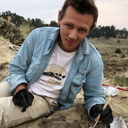
Koen Stein


