
VUB researchers bring medieval Ypres residents to life
Interdisciplinary research sheds new light on migration, lifestyle, health and social status in the medieval metropolis
Researchers from the Vrije Universiteit Brussel (VUB) are playing a key role in the impressive summer exhibition wONDERLAND at the Yper Museum. Thanks to groundbreaking interdisciplinary research on more than a thousand excavated skeletons, they have succeeded in giving the anonymous medieval city-dweller a face and a voice once again after centuries.
During the First World War, Ypres was virtually razed to the ground, with the entire city archive in the cloth halls – where the museum is now housed – going up in flames. For decades, historians were left in the dark. Recent large-scale urban regeneration projects have unexpectedly changed all that. From the West Flemish clay soil, which had perfectly preserved the remains, several thousand skeletons were excavated at three different sites (two parish churchyards: St Nicholas and St Martin, and a leper colony, Hooge Siecken).
“What began as a necessity due to the lack of written sources has developed into a huge scientific advantage,” explains VUB Professor Dr Bart Lambert (VUB-SHOC), coordinator of the VUB component of the historical section. “At present, there is probably nowhere else in Flanders where as much interdisciplinary research has been carried out on that period as in Ypres. We are almost conducting centuries-old crime scene investigations here .”
Surprising discoveries about medieval women and knights
Although Ypres was a thriving metropolis in the 13th century, with some 30,000 inhabitants and renowned for its cloth industry, chemical analyses of the bone material reveal a surprising local picture. Using advanced isotope analysis, VUB researchers Rachèl Spros, Charlotte Van Riet and Lucy Koster, supervised by Christophe Snoeck, mapped the mobility of the population.
The results challenge some persistent clichés: despite the international cloth trade, the vast majority of those buried in Ypres turned out to be of local or regional origin. Long-distance migrants were rare. The mobility that did exist (on a regional scale) turned out to be driven at least as much by women as by men, which contradicts the traditional image of the sedentary medieval woman.
The undisputed highlight of the exhibition is the skeleton of a man from the 11th century (before the first recorded mention of the name Ypres), buried in a prestigious iron sandstone tomb. A team of osteologists, led by Barbara Veselka, carried out osteological research on the skeletal remains, in collaboration with the Department of Anatomy and Traumatology at UZ Brussels. “The research revealed that the man suffered from horse-rider syndrome, a specific bony overgrowth on the hip bone caused by intensive horse riding,” says researcher Martijn Jacobs. “This points to an early local elite. At the same time, the isotopes show that he grew up locally: he was therefore likely a true-born, ‘self-made’ leader from Ypres.”
In addition, ordinary labourers left their mark: deep notches were found in the teeth of numerous skeletons dating from the 13th century onwards, caused by the repeated cleaning or tightening of the threads used in the spinning and weaving industries.
Science in the spotlight
wONDERLAND is not merely a historical exhibition; it is an ode to scientific ingenuity itself. Visitors literally step into the researchers’ shoes. The finale of the exhibition is entirely centred on the methods used in interdisciplinary research at the VUB. Through interactive models, visualisations and hands-on activities, the general public learns how isotope analysis and osteological research, supported by advanced equipment such as CT scanners, are used to unravel the secrets of bone material.
The exhibition at the Ypres Museum (housed in the rebuilt Lakenhallen) is co-sponsored by Ypres City Council and will run until spring 2027.
The VUB’s contribution to the research stems from the ambitious project ‘The Make-up of the City’, led by the research groups Social History of Capitalism (SHOC), Archaeology, Environmental & Geo-Chemistry (AMGC), and Human Physiology (MFYS) at the VUB, in close collaboration with UZ Brussel.
On the academic front, the Ypres Museum collaborated with the Immovable Heritage Agency, CO7, the Vrije Universiteit Brussel, KU Leuven and Ghent University.
Further information:
- Exhibition website: https://www.ypermuseum.be/nl/wONDERLAND
- Research project website: https://www.makeupofthecities.com/
Contact:Bart Lambert: bart.lambert@vub.be
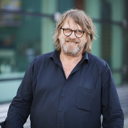
Frans Steenhoudt


