
VUB Researcher Refines the Hunt for Cosmic Neutrinos
Phd Sheds New Light on Signal Propagation in Radio Simulations of Particle Cascades

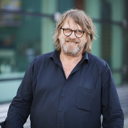
Dieder Van den Broeck, a researcher at the Vrije Universiteit Brussel (VUB), successfully defended his PhD in physics, titled Signal Propagation in the Simulation of Radio Emission from Particle Cascades. His research offers a novel perspective on how radio signals can be used to detect ultra-high-energy cosmic particles.
“When a cosmic particle interacts with the Earth’s atmosphere or surface, it can trigger a cascade of secondary particles”, Van den Broeck explains. “During that process, radio emission is generated, which we can detect using antennas.” Accurately simulating these radio signals is crucial to understanding the origin and nature of the particles.
The core of Van den Broeck’s doctoral research focuses on how signals propagate within simulation environments. “Most models assume that radio signals follow a simplistic propagation path”, he says, “but in reality, the medium through which the radiation travels plays a significant role in the simulation of radio signals from particle cascades.”
By incorporating these physical nuances into computational models, Van den Broeck was able to evaluate and, where necessary, improve the accuracy of existing simulation methods. His findings also enabled the development of new simulations for particle cascades occurring in various natural materials.
His research directly contributes to international experiments such as ARA (Askaryan Radio Array) and RNO-G (Radio Neutrino Observatory in Greenland), where radio signals in polar ice are used to detect traces of cosmic neutrinos. “The ultimate goal is to observe the universe through cosmic particles like neutrinos”, Van den Broeck says. “And that requires precise measurements of these particles here on Earth.”
With his doctoral work, Van den Broeck makes a significant contribution to the detection of some of the most mysterious particles in the universe and helps shape the future of astroparticle physics.
His research results have been published in leading scientific journals. A selection of relevant publications related to his PhD can be found here: https://orcid.org/0000-0002-4442-6690
More info:
Dieder Van den Broeck
Dieder.Jan.Van.Den.Broeck@vub.be
+32 476 91 73 41
Frans Steenhoudt


