
VUB Professor Philippe Claeys receives the Barringer Medal for his research into meteorite impacts
Claeys ensured that his VUB laboratory had access to state-of-the-art analytical facilities for isotopic and geochemical research

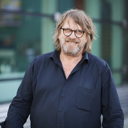
VUB geologist and planetary scientist Philippe Claeys has been awarded the Barringer Medal and Award, a prestigious international honour. Claeys is one of the world’s leading researchers into the consequences of such impacts on Earth and life. His research into the Chicxulub impact, which 66 million years ago was one of the factors behind the extinction of the dinosaurs, is particularly well known internationally.
The Barringer Medal is awarded by the Meteoritical Society and honours scientists who have made an exceptional contribution to research into impact craters and impact phenomena. For Claeys, the prize is the culmination of a research career that has been dedicated to meteorites, impacts and major changes in the history of our planet for more than three decades.
From the extinction of the dinosaurs to Chicxulub
Claeys became fascinated by the meteorite impact at the boundary between the Cretaceous and Palaeogene periods whilst still a PhD student. He obtained his PhD in 1993 from the University of California, with Walter Alvarez, amongst others, as his supervisor. Alvarez was one of the discoverers of the crucial geological evidence that a massive meteorite impact 66 million years ago was linked to the mass extinction that saw the disappearance of, amongst others, the non-flying dinosaurs.
Claeys expanded on that research and made significant contributions to our understanding of the formation of the Chicxulub crater in Mexico and of the geological and ecological consequences of the impact. He studied rock layers around the world containing material ejected during the impact and was involved in various scientific drilling campaigns in the Chicxulub Crater, including the major international ICDP-IODP campaign from 2016 onwards.
Walter Alvarez described Claeys as “one of the two scientists who, over more than four decades, have made the greatest contribution to our understanding of that crucial event in Earth’s history”.
His research was not limited to Chicxulub. Claeys also worked at other major impact sites, such as Bosumtwi in Ghana, Chesapeake Bay in the United States and Popigai in Russia. In addition, his research covers, amongst other things, meteorites and micrometeorites, palaeoclimate and how major changes in the Earth system throughout geological history can be reconstructed.
More than twenty years at the VUB
Claeys joined the Vrije Universiteit Brussel as a professor in 2001. Today, he heads the interdisciplinary large-scale research group Archaeology, Environmental Changes and Geo-Chemistry (AMGC), in which more than a hundred geologists, chemists, biologists, engineers and archaeologists collaborate.
At the VUB, he not only developed an international research programme but also mentored a new generation of scientists. Under his supervision, 32 PhD theses have been defended to date, and he has supervised dozens of postdoctoral researchers, as well as Master’s and Bachelor’s students. Claeys ensured that his VUB laboratory had access to state-of-the-art analytical facilities for isotopic and geochemical research. His scientific output comprises more than 300 international publications, including eight articles in *Science*, three in *Nature* and eight in *PNAS*.
Claeys was also active in numerous international scientific organisations and, until recently, served as chair of the Executive Committee of the International Continental Scientific Drilling Programme (ICDP).
Now that he is approaching retirement age at the VUB, his scientific career is far from over. Claeys is also a professor at the Pacific Centre for Isotopic and Geochemical Research and the Department of Earth, Ocean and Atmospheric Sciences at the University of British Columbia in Vancouver, and will continue his research in Canada.
Frans Steenhoudt


