
Vrije Universiteit Brussel professor Steven Lowette appointed to top position within world-famous CMS experiment at CERN
"I will begin my mandate with an enormous dataset that remains largely unexplored"
Amid Higgs bosons, dark matter and millions of collisions per second, Steven Lowette, professor at the Vrije Universiteit Brussel, has been appointed to one of the most prestigious positions within CERN, the European particle physics research centre in Geneva. For a period of two years, he will serve as physics coordinator of the renowned CMS experiment. With this appointment, he becomes one of the leading managers of one of the largest scientific collaborations.
CMS is one of the four major experiments at the Large Hadron Collider (LHC), CERN’s 27-kilometre particle accelerator. Within this underground ring, particles collide at close to the speed of light in order to investigate the smallest building blocks of the universe and to search for new particles and phenomena. The experiment played a pivotal role in the discovery of the Higgs boson in 2012, a scientific breakthrough that captured worldwide attention.
The CMS experiment has evolved into a vast international collaboration involving more than 3,300 physicists from 58 countries, including over 1,200 doctoral researchers. Belgian universities have been involved in CMS since its inception in 1992 and today account for approximately 2.5 per cent of the experiment. Yet no Belgian researcher has ever before been appointed physics coordinator. The fact that a professor from the Vrije Universiteit Brussel is now assuming this role is therefore regarded as an important signal of the international standing of Belgian science.
The role of physics coordinator ranks among the very highest positions within the CMS management structure. Together with a colleague, Lowette will oversee the experiment’s entire scientific output from September 2026 until August 2028. He will be responsible for quality control across all research results, the day-to-day organisation of hundreds of data analyses, and the long-term vision for the experiment’s full physics programme. In a project of this scale, that represents a role of considerable impact — not only organisationally, but scientifically as well. “The physics coordinator plays a crucial role within the senior management of the CMS experiment,” says Lowette. “Our overarching task is to enable all members of the experiment to analyse data and produce top-quality results in the most efficient and impactful manner possible.”
The challenge is immense. CMS functions as a kind of digital camera the size of a cathedral, capturing 40 million images per second of the collisions taking place inside the LHC. This colossal quantity of data is processed through a worldwide computing network and forms the basis for analyses that often take years to complete.
According to Lowette, CMS is now entering a particularly exciting phase. “At the end of June, we will conclude a period in which the LHC delivered collisions at an intensity never previously achieved,” he says. “During this so-called Run-3 period, we collected approximately twice as many collisions as during Run-2. I will therefore begin my mandate with an enormous dataset that remains largely unexplored.”
Over the coming years, these new data are expected to lead to a series of major discoveries. “We discovered the Higgs boson fourteen years ago, but the broader physics programme within CMS remains extraordinarily vibrant,” says Lowette. “It is already virtually certain that we will soon observe, for the first time beyond doubt, a rare decay of the Higgs boson into a pair of muons. In addition, we aim to build an increasingly detailed understanding of the interaction of the Higgs boson with itself, a central prediction of our theoretical framework.”
At the same time, research is continuing into dark matter, the properties of the top quark, the differences between matter and antimatter, and the state of matter immediately following the Big Bang – and more. “Through our research, we will significantly advance our understanding of physics,” Lowette adds.
Meanwhile, CERN is preparing for a major upgrade of both the Large Hadron Collider and the CMS detector by 2030. The upgraded detector will generate even larger quantities of data and will require in-depth adaptations to software, analysis systems and the organisation of the experiment itself. “A great deal of preparatory work is already under way to develop the components upon which we build our data analyses,” says Lowette. “That will form a second challenging priority during my mandate.”
About Steven Lowette
For Lowette, the appointment is the culmination of a long international career. He has been involved with CMS since 2001. He first joined the experiment as a doctoral researcher at the Vrije Universiteit Brussel. He subsequently spent six years as a postdoctoral researcher at the University of California, Santa Barbara, an institution with a strong international reputation in physics. He later returned to Brussels through an FWO Odysseus II mandate.
That return proved decisive. At the VUB, he was able to establish a research line that continues until 2028. This gave him the opportunity to further strengthen his position within CMS and within the international scientific community. The past academic year also proved significant. During that period, Lowette worked for a year directly from CERN itself, which provided an additional impetus. During his stay, he coordinated, among other responsibilities, the joint contribution of the CMS and ATLAS experiments to the European Strategy for Particle Physics. This strategic plan helps shape the future of particle physics research in Europe. It is a responsibility entrusted only to researchers with extensive experience and broad trust within the field.
Lowette’s appointment followed an internal selection procedure involving all international partners within the CMS experiment. The decision was formally ratified on 15 May by the experiment’s overarching governing body. The mandate will commence on 1 September 2026. With this appointment, the Vrije Universiteit Brussel and Belgium secure a top management position within one of the world’s largest particle physics experiments.
More information:
Steven Lowette: steven.lowette@vub.be
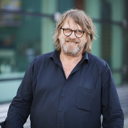
Frans Steenhoudt


