
VUB Researcher Eric Kerckhofs Investigates Whether We Truly Have Free Will
Amid the complexity of our decision-making, an opening remains for genuine human agency

Does something like ‘free will’ really exist? We often take it for granted, but philosophers, psychologists and neuroscientists have debated the issue for decades — if not centuries. In his recent PhD at the Vrije Universiteit Brussel (VUB), titled The Free Will Discussion: an Interdisciplinary Analysis from the Psychological, Neuroscientific and Neurophilosophical Perspective, Eric Kerckhofs delves deeper into this fundamental question. His approach is unusually broad, drawing together insights from psychology, neuroscience and philosophy.
“The free will debate touches on how we view ourselves as human beings, as well as major societal issues such as responsibility and blame,” Kerckhofs explains. “Yet the disciplines that study it often operate in isolation. My aim was to bring those perspectives into dialogue.”
In his research, he explores six core questions. Among them: what does ‘free will’ actually mean? He arrives at three essential criteria — the ability to choose, to have control over one’s actions, and to act for reasons. A key moment in the modern free will debate came in the 1980s with the famous Libet experiment. Neuroscientist Benjamin Libet asked participants to move their finger at a random moment while he recorded both their brain activity and the instant they became aware of their intention to move. What he found was striking: brain activity indicating preparation for movement — known as the “readiness potential” — occurred several hundred milliseconds before participants reported being consciously aware of their decision.
“This was quickly interpreted as proof that free will is an illusion,” says Kerckhofs. “But that’s jumping to conclusions. The experimental task was artificial and limited — it tells us little about the complex decisions we make in everyday life. Later studies have also revealed methodological shortcomings.”
Kerckhofs argues that Libet’s experiments mainly tell us something about spontaneous hand movements, not deliberate, reasoned choices. His conclusion is clear: the Libet experiment does not disprove free will, but it does show that unconscious processes play a bigger role than we often realise. “Libet’s finding — that brain activity precedes conscious intention — is often misinterpreted,” he says. “What the experiments really show is that the brain prepares for action, not that conscious will plays no part.”
Another thorny issue is the concept of determinism — the idea that everything in the universe is preordained. “Some philosophers claim that determinism makes free will impossible,” Kerckhofs notes. “But modern physics suggests that reality is far more complex, allowing room for unpredictability and multiple possible outcomes.” Within that complexity, he sees space for genuine human choice.
He also examines the role of the ‘self’ in our actions. For Kerckhofs, the self is not a fixed location in the brain but rather a layered, dynamic construct. Different models of the self — from the ‘narrative self’ to the ‘phenomenal self’ — help explain how we experience control over our behaviour. “Disorders such as schizophrenia or alien hand syndrome show us what happens when that sense of control breaks down,” he says.
Willpower also features prominently. Like a muscle, it can be depleted — but also strengthened. “Self-control, the capacity to resist impulses and pursue goals, is crucial to the exercise of free will,” Kerckhofs states.
In his conclusions, he argues that free will is not an absolute but a gradual phenomenon. “We do not possess total or unlimited free will — but that doesn’t mean it doesn’t exist.” Kerckhofs advocates for the use of the term ‘personal autonomy’ in place of the often loaded notion of ‘free will’. He closes his dissertation with provocative questions: can groups of people share a kind of collective free will? And could we ever build a robot with free will?
His work contributes to a growing movement within neurophilosophy to understand complex concepts such as intention, choice and consciousness in a more layered and interdisciplinary way. With his dissertation, Kerckhofs opens the door to a more nuanced, more human view of free will — not as an illusion, but as a fragile yet real capacity that can be understood, developed and safeguarded.
Contact
Eric Kerckhofs: eric.kerckhofs@vub.be, +32 484 40 45 09
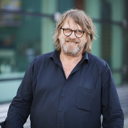
Frans Steenhoudt